

Cool Roofs and More: Weatherization Trends for Summer 2025
You’ll transform your home’s comfort and energy efficiency with 2025’s innovative weatherization solutions. Cool roofs with reflective materials can lower surface temperatures by up to 50 degrees, while AI-powered ventilation systems adapt to your daily routines. Smart windows featuring dynamic glazing reduce solar heat gain by 75%, and next-generation thermal coatings offer superior temperature control. With federal tax credits and instant rebates available, exploring these modern solutions will reveal significant energy savings.
Key Takeaways
- Advanced thermal coatings with smart polymers and reflective pigments offer 85% better temperature control than traditional paint.
- AI-powered ventilation systems with predictive algorithms can reduce energy costs by 30% through automated temperature management.
- Electrochromic windows automatically adjust tint levels and reduce solar heat gain by 75% while maintaining natural light.
- Strategic landscaping with native trees creates natural cooling zones through transpiration, reducing reliance on artificial cooling.
- Federal legislation in 2025 provides expanded funding and tax credits up to $3,000 for energy-efficient home improvements.
The Science Behind Cool Roofs: How They Keep Your Home Temperature Down
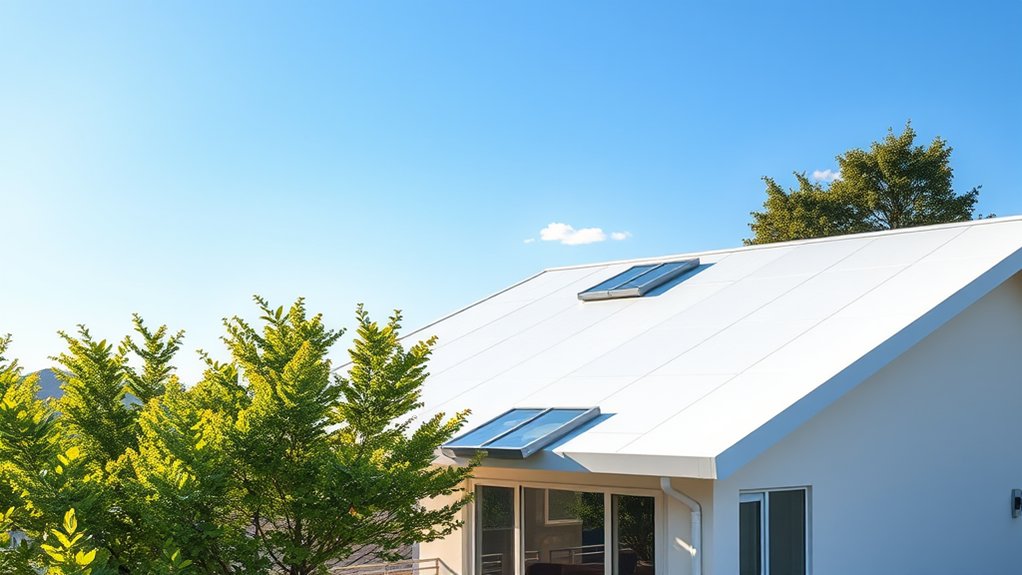
While traditional dark-colored roofs absorb up to 90% of the sun’s heat, cool roofs use reflective materials and light colors to dramatically reduce your home’s temperature during hot summer months. You’ll find that cool roofs work through a sophisticated combination of specialized coatings and engineered surfaces that redirect solar energy away from your house. The technology incorporates a radiant barrier beneath the roof’s surface, which acts like a thermal shield to prevent heat from entering your living space. When you choose cool roofing materials, you’re investing in a system that reflects infrared and ultraviolet rays while emitting absorbed heat back into the atmosphere. These innovative materials can lower your roof’s surface temperature by up to 50 degrees Fahrenheit, which translates to significant energy savings and improved indoor comfort. Additionally, incorporating energy-efficient practices in conjunction with cool roofs can further enhance your home’s overall performance and comfort level.
Smart Ventilation Systems: AI-Powered Climate Control
Beyond innovative roofing solutions, modern homes are embracing intelligent ventilation systems that take climate control to new heights. You’ll find that these AI-powered systems use smart sensors and predictive algorithms to maintain your ideal home environment while maximizing energy efficiency.
- Multi-zone monitoring tracks temperature, humidity, and air quality in different rooms
- Adaptive learning systems adjust airflow based on your daily routines and preferences
- Weather-responsive automation prepares your home for incoming temperature changes
- Smart scheduling optimizes ventilation during peak energy hours
Your home’s ventilation system will anticipate your needs, automatically adjusting settings before you even notice discomfort. These intelligent systems can reduce your energy costs by up to 30% while maintaining perfect indoor conditions, making them a must-have upgrade for the tech-savvy homeowner. Furthermore, integrating crawl space encapsulation can significantly improve indoor air quality, complementing your smart ventilation system.
Next-Generation Thermal Coatings and Their Applications
As innovative materials science continues to evolve, next-generation thermal coatings are revolutionizing how we protect our homes from heat and cold. You’ll find advanced thermal emulsions that adapt to temperature changes, creating a responsive barrier against weather extremes. These coatings combine reflective pigments with smart polymers to maximize energy efficiency. Additionally, homeowners should consider crawl space encapsulation, which can significantly improve indoor air quality and contribute to energy savings.
| Coating Type | Protection Level | Best Application |
|---|---|---|
| Ceramic-Based | High | Roof Surfaces |
| Phase-Change | Medium | Exterior Walls |
| UV-Reactive | Maximum | Windows/Glass |
You can now choose coatings that’ll work harder than traditional paint, offering up to 85% more temperature control. When you’re planning your next weatherization project, look for products that feature multi-layer protection systems, which combine both insulating and reflecting properties for peak performance.
Energy-Efficient Windows and Dynamic Glass Solutions

Since modern window technology has transformed greatly in recent years, you’ll find an impressive array of energy-efficient options that can dramatically reduce your cooling costs. Dynamic glazing solutions now offer smart functionality that adapts to changing sunlight conditions, making your home more comfortable and energy-efficient throughout the day.
- Electrochromic windows automatically tint when bright sunlight hits them, reducing solar heat gain by up to 75%
- Low-E glass coatings reflect infrared light while letting natural daylight pass through
- Multi-pane windows with argon or krypton gas filling provide superior insulation against summer heat
- Smart window systems connect to your home automation, adjusting tint levels based on time, temperature, and occupancy patterns
These innovations help you maintain ideal indoor temperatures while lowering your energy bills considerably. Additionally, investing in these energy-efficient windows can significantly contribute to lowering energy bills and enhancing your home’s overall energy efficiency.
Advanced Insulation Materials Revolutionizing Home Comfort
Modern insulation technology has evolved far beyond traditional fiberglass batting, introducing revolutionary materials that transform how your home manages temperature. You’ll find cutting-edge aerogel technology, originally developed for spacecraft, now making its way into residential construction with its incredible ability to trap air and block heat transfer.
Smart spray foam solutions have also changed the game, expanding to fill every crack and crevice while creating an airtight seal that’ll greatly reduce your energy costs. These advanced materials don’t just insulate better – they’re also lighter, thinner, and more effective than their predecessors. When you’re planning your next home upgrade, you’ll discover these innovative solutions can maintain comfortable temperatures year-round while taking up less space in your walls and attic. Proper crawlspace insulation, particularly using materials with optimal R-Values, ensures energy efficiency and comfort in your home.
Natural Cooling Strategies: Landscaping and Shade Management
While advanced insulation materials work wonders inside your home, the natural environment outside can be just as powerful for temperature control. You’ll find that strategic landscape design, combined with innovative shade structures, can dramatically reduce your cooling needs and combat the urban heat island effect.
- Plant native trees along your home’s south and west sides to create nature’s air conditioning system through urban forestry.
- Install modern shade structures with reflective surfaces that redirect sunlight while creating stylish outdoor cooling zones.
- Transform your property with green roofs that absorb heat and provide additional insulation year-round.
- Design your landscape with native plants that thrive in local conditions and naturally cool the surrounding air through transpiration.
These natural solutions work together to create a sustainable cooling system that’s both beautiful and efficient. Furthermore, sealing crawl space vents can further improve energy efficiency by minimizing dampness and reducing HVAC workload.
Cost Analysis: Long-Term Savings From Modern Weatherization

When homeowners invest in thorough weatherization upgrades, they’ll discover significant financial benefits that extend far beyond the initial costs. A detailed cost benefit analysis shows you’ll typically recoup your investment within 3-5 years through reduced energy bills, which can amount to $350-500 annually in savings.
You’ll find that modern weatherization solutions, like smart thermostats and high-efficiency window films, are long term investments that increase your property’s value while decreasing monthly expenses. Your home’s energy efficiency rating will improve by 25-40%, and you’ll notice immediate comfort improvements in both summer and winter. The latest weatherization technologies, including spray foam insulation and weather-stripping systems, offer an impressive return on investment that makes your initial spending worthwhile, especially as energy costs continue to rise.
Weatherization Tax Credits and Incentives for 2025
Thanks to recent federal legislation, you’ll find an impressive array of tax credits and financial incentives available for weatherization projects in 2025. These funding sources can greatly reduce your upfront costs while maximizing long-term financial benefits for your home improvements.
- You’ll get up to 30% back on energy-efficient window installations and smart insulation systems, with a maximum credit of $3,000.
- State-matching grants can double your tax incentives when you install qualifying heat pumps or solar-reflective roofing.
- Low-income households meeting eligibility requirements can access additional funding up to $8,000 for extensive weatherization upgrades.
- Local utility companies are offering instant rebates of $500-$1,500 for smart thermostats and energy monitoring systems that coordinate with their grid-optimization programs. Additionally, these incentives align with the Energy Efficient Home Improvement Credit, promoting energy conservation and enhancing your home’s comfort.
Frequently Asked Questions
How Long Does It Take to Complete a Full Home Weatherization Project?
You’ll need 2-5 days for your home weatherization project timeline, depending on size and scope. For maximum insulation effectiveness, it’s smart to complete all upgrades within a single season.
Can Cool Roofs Be Installed Over Existing Traditional Roofing Materials?
You can apply cool roof materials over existing roofing through retrofitting techniques like reflective coatings or overlays, but you’ll need to guarantee your structure can support the additional weight.
Will Weatherization Modifications Affect My Home’s Resale Value?
You’ll boost your home’s resale value with weatherization upgrades, as market demand for energy-efficient homes grows. Home appraisals now factor in these improvements, making your property more attractive to buyers.
Are Weatherization Upgrades Suitable for Historic or Older Homes?
You can modernize your historic home while respecting preservation guidelines. Many weatherization upgrades are reversible and complement original features, helping you achieve energy efficiency without compromising architectural integrity.
Do Smart Ventilation Systems Work During Power Outages?
Your smart home technology won’t keep ventilation systems running during blackouts unless you’ve installed battery backup power. For continuous ventilation efficiency, consider adding an emergency power source or manual backup options.
Conclusion
As you prepare for warmer days ahead, you’ll find that modern weatherization offers impressive solutions for keeping your home cool and energy bills low. From AI-powered ventilation to advanced thermal coatings, these technologies aren’t just trends – they’re investments in your home’s future. By combining these innovative approaches with natural cooling strategies and available tax incentives, you’re well-equipped to create a comfortable, efficient living space for years to come.
Fix It for Good — Related Services
Reading about the problem is step one. These pages cover what we actually do about it, what it costs, and how the 100% free inspection works:


