

From Attic to Basement: Comprehensive Weatherization Tips for Summer Comfort
You’ll boost your home’s energy efficiency and summer comfort by addressing key weatherization areas throughout your house. Start with proper attic insulation and ventilation, then seal air leaks around windows and doors with weatherstripping and caulking. Don’t forget your basement’s moisture control and HVAC maintenance. Strategic landscaping with shade trees can reduce solar heat by 70%. These all-encompassing strategies will release significant energy savings and enhanced indoor comfort.
Key Takeaways
- Address attic insulation and ventilation with proper materials, ensuring baffles prevent blockage and radiant barriers reflect heat away.
- Seal air leaks around windows and doors with weatherstripping and caulk to prevent up to 30% energy loss.
- Protect basements and crawl spaces using spray foam insulation, rigid foam boards, and waterproof foundation coatings.
- Maintain HVAC systems regularly, including filter changes, condenser cleaning, and professional inspections twice yearly.
- Plant deciduous trees 15-20 feet from house’s south and west sides to block up to 70% of solar heat.
Understanding Your Home’s Heat Flow Dynamics

When it comes to keeping your home comfortable during summer, understanding how heat moves through your living space is essential for effective cooling. Your home’s heat transfer patterns follow predictable routes, with warm air naturally rising through your living spaces while seeking cooler zones. You’ll find that heat primarily enters through your roof, windows, and poorly insulated walls, creating a constant flow that impacts your indoor climate.
To optimize your cooling strategy, you’ll need to identify and strengthen your home’s thermal barriers. Think of your house as a system of interconnected spaces where heat moves freely unless blocked. By mapping these heat pathways, you can target problem areas and implement solutions that work with your home’s natural airflow patterns rather than against them. Proper air sealing techniques can significantly enhance your home’s energy efficiency and indoor comfort.
Essential Attic Insulation and Ventilation Strategies
Two essential components of summer weatherization are proper attic insulation and ventilation, working together to create a protective thermal barrier above your living spaces. You’ll find several insulation types to choose from, including fiberglass batts, blown-in cellulose, and foam solutions that can achieve the recommended R-value for your climate zone. High humidity regions, such as Columbia, necessitate insulation with superior fungi resistance to ensure long-lasting effectiveness and prevent moisture issues.
Your attic ventilation system needs to maintain a continuous flow of air, combining soffit vents at the eaves with ridge vents at the peak. This natural convection process helps expel super-heated air during summer months, while proper insulation blocks that same heat from seeping into your rooms below. Install baffles near the soffits to prevent insulation from blocking these vital airflow pathways, ensuring your ventilation system operates at peak efficiency.
Sealing Air Leaks Around Windows and Doors
Air leaks around windows and doors can account for up to 30% of your home’s energy loss, making them critical areas to address in your summer weatherization efforts. You’ll want to start by inspecting frames for visible gaps, cracks, or areas where daylight peeks through.
Install weatherstripping along the sides of doors and windows where moving parts meet, and don’t forget about drafting thresholds that need attention at the bottom of doors. For a quick DIY test, hold a lit incense stick near suspected leak areas – if the smoke wavers, you’ve found a draft. Apply caulk to seal stationary gaps around window frames and door casings, choosing silicone-based products for exterior use. Consider adding storm doors and double-pane windows for enhanced protection against summer heat infiltration. Additionally, focusing on air sealing can significantly reduce energy loss and improve comfort levels throughout your home.
Smart Solutions for Wall and Ceiling Insulation

Proper insulation serves as your home’s protective shield against summer’s relentless heat, making it essential for maintaining comfort and reducing energy costs. When you’re ready to upgrade your insulation, consider these innovative solutions that’ll transform your home’s thermal performance.
Think of insulation as your home’s armor, fighting off heat while keeping your comfort high and energy bills low.
- Install spray foam insulation in wall cavities for superior air-sealing and maximum R-value protection.
- Add a layer of cellulose fiber in your attic, which provides excellent coverage and fire-resistant properties.
- Consider installing radiant barriers in your attic to reflect heat away from living spaces.
- Use blown-in insulation for hard-to-reach wall spaces and irregular areas.
- Implement batt insulation with vapor barriers in exterior walls to control moisture while maintaining thermal efficiency.
These modern insulation techniques work together to create a thorough thermal envelope, helping you maintain ideal indoor temperatures year-round. Additionally, effective insulation creates barriers against heat transfer, promoting a consistent indoor temperature while enhancing the overall health of living conditions.
Basement and Crawl Space Weatherization Methods
While effective wall and attic insulation protect your home from above, the often-overlooked spaces beneath your living area can profoundly impact your home’s comfort during summer months. You’ll want to focus on moisture control and proper air circulation to create a comfortable living environment.
| Area | Problem | Solution |
|---|---|---|
| Floor Joists | Heat Transfer | Spray Foam Insulation |
| Rim Joists | Air Leaks | Rigid Foam Boards |
| Foundation | Moisture Seepage | Waterproof Coating |
| Vents | Poor Circulation | Dehumidifier Installation |
| Pipes | Condensation | Pipe Insulation Wrap |
Start by sealing any visible gaps in your foundation walls, then install a vapor barrier across the crawl space floor. You’ll also want to guarantee proper ventilation through strategically placed vents, which help manage humidity levels and prevent mold growth. Implementing effective moisture control techniques is essential to ensure a dry environment, ultimately enhancing your home’s overall comfort.
Energy-Efficient Window Treatments and Upgrades
Windows represent one of your home’s most vulnerable points for heat gain during summer months. To maximize your cooling efficiency, you’ll want to explore innovative window treatments that combine style with functionality.
- Install energy efficient blinds that automatically adjust to sunlight intensity, reducing heat gain by up to 45%
- Apply solar reflective films to your windows, which can block up to 80% of solar heat while maintaining visibility
- Mount exterior awnings that provide shade while adding architectural interest
- Use cellular shades with honeycomb pockets that trap air and create an insulating barrier
- Consider smart window tinting that changes opacity based on temperature and sunlight
Incorporating these window upgrades not only enhances energy efficiency but also contributes to lower utility bills and improved indoor air quality.
Weather Stripping and Caulking Techniques
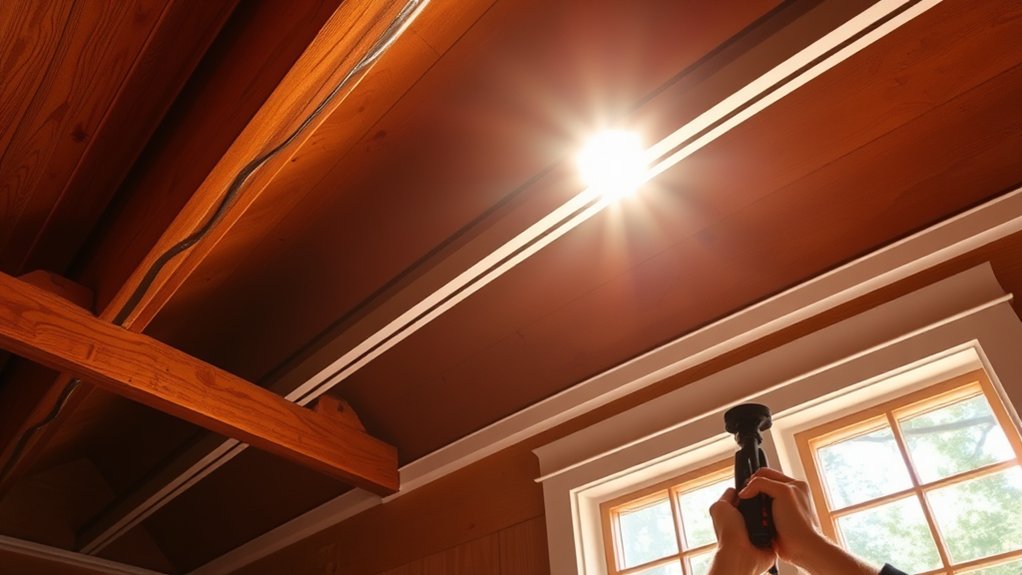
Keeping your home’s cool air from escaping through gaps and cracks requires strategic weather stripping and caulking throughout your living space. You’ll find various weather stripping types suited for different areas, from adhesive foam tape for windows to door sweeps for entryways. Using the right caulking tools, like a quality caulking gun and silicone-based sealants, guarantees precise application around window frames and baseboards. Weatherizing homes can enhance your summer comfort by significantly reducing energy bills.
| Location | Weather Stripping | Caulking |
|---|---|---|
| Windows | V-strip metal | Silicone-based |
| Doors | Foam tape | Latex acrylic |
| Baseboards | Felt strips | Paintable latex |
For best results, clean surfaces thoroughly before applying any materials, and work in temperatures above 50°F. You’ll want to replace weather stripping every few years, while properly applied caulk can last up to a decade with minimal maintenance.
HVAC Maintenance and Optimization Tips
Regular maintenance of your HVAC system plays an essential role in achieving ideal summer comfort and energy efficiency throughout your home. You’ll want to optimize your system’s performance through smart, proactive steps that keep your cooling costs down while maximizing comfort.
Proactive HVAC maintenance ensures optimal comfort while keeping energy costs manageable through smart, efficient system operation.
- Replace HVAC filters every 1-3 months, depending on your home’s air quality and system usage
- Program your thermostat settings to adjust automatically, raising temperatures when you’re away
- Clean your outdoor condenser unit, removing debris and vegetation within two feet
- Schedule professional maintenance twice yearly to catch potential issues early
- Check and clean your vents and ductwork to guarantee proper airflow
- Consider addressing potential moisture issues with effective moisture control, as it can significantly improve your HVAC system’s efficiency and longevity.
Utilizing Natural Shade and Landscaping Benefits
While modern cooling systems provide essential comfort, strategic landscaping and natural shade solutions can greatly reduce your home’s cooling needs throughout summer. Smart landscape design integrates deciduous trees on your home’s south and west sides, creating natural air conditioning during peak heat hours. You’ll want to position these shade trees 15-20 feet from your house for ideal cooling coverage.
Consider incorporating trellises with climbing vines near windows and walls that receive direct sunlight, as they’ll create additional shade barriers. Strategic tree placement can block up to 70% of solar heat while allowing winter sunshine through bare branches. By combining these natural solutions with your existing cooling system, you’re creating a sustainable approach to temperature control that’ll reduce both energy costs and environmental impact. Additionally, understanding and implementing energy-efficient strategies ensures maximum effectiveness in your home’s cooling efforts.
Measuring and Monitoring Energy Performance
Smart monitoring of your home’s energy usage builds upon natural cooling strategies to create a complete approach to summer comfort. By tracking your energy consumption patterns, you’ll identify areas where improvements can make the biggest impact on both comfort and costs.
- Install a smart thermostat that learns your schedule and provides detailed performance monitoring
- Schedule professional energy audits to detect air leaks and insulation gaps using thermal imaging
- Use plug-in energy meters to measure individual appliance consumption
- Set up a home energy monitoring system that tracks real-time usage through your smartphone
- Keep a log of monthly energy bills to compare year-over-year improvements
- Consider blower door testing to accurately assess your home’s airtightness and identify critical air leaks that could affect cooling efficiency.
You’ll be amazed at how these monitoring tools reveal opportunities for better efficiency, helping you make data-driven decisions about your home’s cooling strategy.
Frequently Asked Questions
How Long Does Weatherization Take for an Average-Sized Home?
You’ll typically need 2-3 days for basic weatherization timeline, though the average duration can extend to 5-7 days if you’re doing thorough air sealing, insulation upgrades, and window treatments.
Can I Weatherize My Rental Property Without the Landlord’s Permission?
You’ll need your landlord’s written approval before making permanent weatherization changes. However, you can explore tenant-friendly options like removable window films, draft stoppers, and thermal curtains within your tenant rights.
What Government Incentives Are Available for Home Weatherization Projects?
You’ll find federal rebates through programs like Weatherization Assistance Program (WAP) and state programs offering tax credits. Check your state’s energy office website to discover available incentives for your projects.
How Much Money Should I Budget for a Complete Home Weatherization?
You’ll need $3,000-$7,500 for complete home weatherization. Your cost breakdown depends on home size and current conditions. Start budget planning by getting a professional energy audit first.
Should I Hire Professionals or Attempt DIY Weatherization for Best Results?
If you’re confident in your DIY skills, tackle simple tasks like weatherstripping and caulking. But for complex jobs involving insulation or HVAC systems, you’ll get better results with professional expertise.
Conclusion
You’ve now got all the tools needed to transform your home into a cool summer sanctuary, from the attic’s peak to the basement floor. By implementing these weatherization strategies, you’ll create a more comfortable living space while cutting those energy bills. Remember, proper insulation, strategic ventilation, and regular maintenance aren’t just one-time fixes – they’re your ongoing investment in year-round comfort and efficiency.
Fix It for Good — Related Services
Reading about the problem is step one. These pages cover what we actually do about it, what it costs, and how the 100% free inspection works:


