
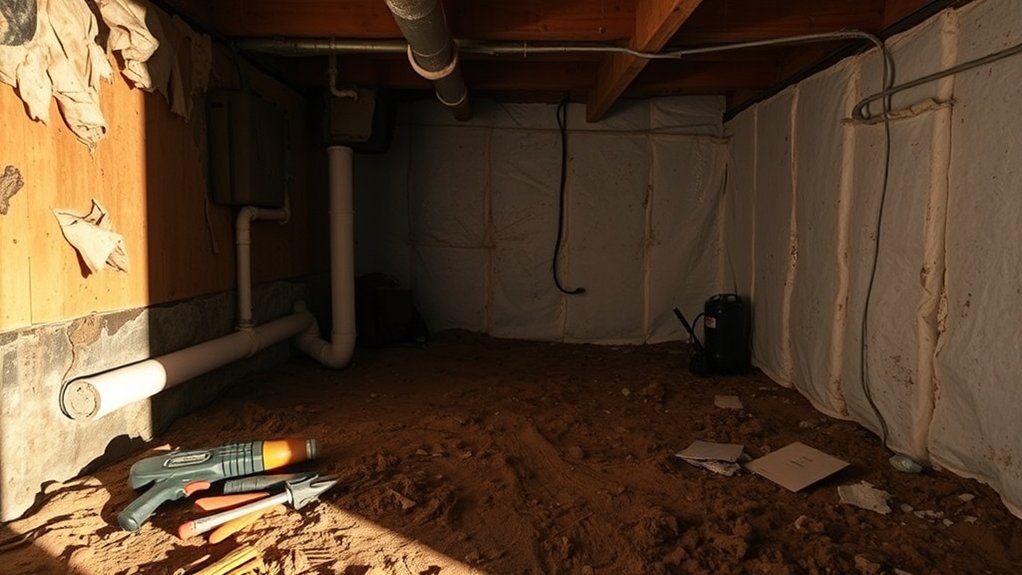
Top 5 Crawlspace Encapsulation Mistakes Attic and Crawlspace Repair Sees in Columbia
The top five crawlspace encapsulation mistakes include ignoring water drainage before sealing, which traps moisture and causes mold; neglecting to grade floors or remove debris that punctures vapor barriers; choosing barriers under 10-mil thickness that tear easily; failing to seal seams and penetrations where moisture sneaks back in; and skipping dehumidifiers in sealed spaces, allowing humidity to accumulate. Each error undermines your investment and creates conditions worse than before encapsulation. Understanding these pitfalls helps you avoid expensive repairs and protect your Columbia home’s structural integrity for years ahead.
Key Takeaways
- Ignoring water drainage before sealing traps moisture under vapor barriers, causing mold growth and structural damage to the foundation.
- Failing to grade floors or remove debris allows standing water accumulation and punctured barriers that compromise encapsulation effectiveness.
- Using vapor barriers thinner than 10-mil results in tears and inadequate moisture protection, requiring costly future replacements.
- Unsealed seams, corners, and pipe penetrations allow moisture infiltration that defeats encapsulation and promotes mold growth.
- Skipping dehumidifiers in sealed crawlspaces traps humidity, leading to condensation, wood rot, and musty odors entering living spaces.
Ignoring Water Drainage Before Crawlspace Encapsulation
Before you seal up your crawlspace with a shiny new vapor barrier, you need to address where water is actually coming from and where it’s going. Many homeowners in Columbia make this critical mistake, and we’ve seen the consequences firsthand. Water doesn’t magically disappear just because you’ve covered it up with plastic. You’re fundamentally trapping moisture underneath, which creates a breeding ground for mold and structural damage. Proper waterproofing methods must come first, including fixing foundation cracks and installing gutters that actually direct water away from your home. Effective drainage solutions, like French drains or sump pumps, guarantee water has somewhere to go. Think of it this way: you wouldn’t put a bandage on without cleaning the wound first, right?
Not Grading the Floor or Removing Crawlspace Debris
While you might think the condition of your crawlspace floor doesn’t matter since nobody sees it, you’d be setting yourself up for serious problems down the road. Proper floor grading creates a slope that directs water away from your foundation, preventing moisture from pooling under your home. When you skip this vital step, you’re inviting standing water, mold growth, and structural damage that’ll cost you thousands later. Additionally, maintaining low humidity levels is crucial for preventing structural damage and fungi growth in your crawl space.
Debris removal is equally essential for your encapsulation’s success. Rocks, wood scraps, old insulation, and construction materials create uneven surfaces that puncture vapor barriers and trap moisture underneath. You’ll want every bit of debris cleared before installation begins, ensuring your encapsulation system works as intended. These preparatory steps protect your investment and keep your home’s foundation healthy for years to come.
Choosing Vapor Barriers Under 10-Mil Thickness
The thickness of your vapor barrier directly determines how well it’ll protect your crawlspace from moisture damage, and anything under 10-mil simply won’t cut it for long-term durability. You’re investing in your home’s foundation, so understanding thickness recommendations guarantees you get the vapor barrier benefits you deserve.
Here’s what you need to know:
- Thinner barriers (6-mil or less) tear easily during installation and regular maintenance
- 10-mil thickness resists punctures from rocks, roots, and foot traffic
- Thicker materials maintain their integrity over decades, not just years
- Quality barriers prevent humidity from compromising your home’s structural supports
- Professional-grade options protect your investment and your family’s comfort
- Moisture control is essential since improper barrier installation can lead to further issues down the line.
You’ll save money long-term by choosing the right thickness now rather than replacing substandard materials later.
Failing to Seal Crawlspace Seams and Penetrations
Even professional-grade vapor barriers become nearly worthless when you leave gaps unsealed at joints, corners, and pipe penetrations. You’re fundamentally inviting moisture right back into your crawlspace, defeating the entire purpose of encapsulation. Common sealing techniques include specialized tape designed for vapor barriers, waterproof caulk for smaller gaps, and spray foam for larger penetrations around plumbing and electrical lines. Don’t overlook air pressure considerations either—your crawlspace experiences constant pressure changes that’ll exploit every unsealed edge. We’ve seen homeowners invest thousands in premium materials, only to watch mold return because they skipped proper sealing. Taking time to methodically seal every seam, overlap, and penetration point guarantees your encapsulation system actually protects your home’s foundation and air quality. Inadequate sealing can lead to increased humidity levels, exacerbating moisture-related issues and undermining your entire encapsulation effort.
Skipping the Dehumidifier in Sealed Crawlspaces
After sealing your crawlspace completely, you’ve created a closed environment where moisture has nowhere to escape—and that’s when most homeowners make a critical oversight. Without proper moisture control, you’re basically trapping humidity that’ll create the perfect breeding ground for mold and structural damage.
Here’s what happens without a dehumidifier:
- Condensation forms on cold surfaces, leading to wood rot
- Mold spores multiply rapidly in humid conditions
- Musty odors infiltrate your living spaces above
- Insulation loses effectiveness when saturated
- Foundation repairs become necessary sooner than expected
Dehumidifier selection matters greatly for your crawlspace size and climate. You need a unit specifically designed for crawlspaces, not a standard basement model, to maintain humidity levels below 55%. Additionally, operating dehumidifiers continuously is advisable in humid regions to prevent moisture accumulation and related issues.
Frequently Asked Questions
How Much Does Professional Crawlspace Encapsulation Cost in Columbia?
You’ll typically spend between $5,000 and $15,000 for professional crawlspace encapsulation in Columbia, though cost factors like square footage, moisture severity, and material quality greatly impact your final price. The installation benefits you’ll gain—improved energy efficiency, reduced humidity, and better air quality—make this investment worthwhile for your home’s long-term health. Your specific needs determine whether you’re closer to the lower or higher end of this range.
Can I Install Crawlspace Encapsulation Myself or Hire a Professional?
You can tackle crawlspace encapsulation yourself, but it’s challenging without experience. DIY Techniques include installing vapor barriers and sealing vents, which saves money upfront. However, Professional Benefits far outweigh the risks—experts properly address moisture issues, guarantee complete sealing, and secure their work. They’ll spot problems you might miss, like structural damage or mold. For lasting protection and peace of mind, hiring a professional is your smartest investment.
How Long Does Crawlspace Encapsulation Typically Last Before Needing Replacement?
You’ll enjoy long term benefits for 15-20 years when you’ve properly installed your crawlspace encapsulation. The vapor barrier and dehumidifier can last even longer with smart maintenance tips like regular inspections, cleaning your dehumidifier filters monthly, and checking for tears or damage. You’re protecting your home’s foundation while keeping energy costs down, which makes this investment worth celebrating with fellow homeowners.
Will Crawlspace Encapsulation Help Reduce My Home’s Energy Bills?
Yes, you’ll see lower energy bills with crawlspace encapsulation. By improving energy efficiency through proper sealing and insulation, your HVAC system won’t work as hard to maintain comfortable temperatures. The moisture control benefits also prevent humid air from seeping into your living spaces, which means less strain on your air conditioning during Columbia’s hot summers. Most homeowners notice a 15-20% reduction in heating and cooling costs after installation.
Does Homeowners Insurance Cover Crawlspace Encapsulation Repairs or Installation?
Most homeowners insurance policies won’t cover crawlspace encapsulation installation since it’s considered a preventative upgrade. However, you’ll find coverage limits may apply if damage from covered perils like flooding or storms requires encapsulation repairs. We recommend reviewing your specific policy details with your insurance agent, as some carriers offer partial reimbursement for moisture-related damage that necessitates encapsulation work to protect your home’s structural integrity.
Conclusion
You’ll avoid costly problems down the road by steering clear of these common crawlspace encapsulation mistakes. Take time to address drainage issues first, install quality vapor barriers correctly, and don’t forget that dehumidifier. Your Columbia home deserves proper moisture protection, and cutting corners now means expensive repairs later.
Don’t let another winter pass with an inefficient home. Cold drafts, high heating bills, and uneven temperatures don’t have to be part of your Columbia winter. At Attic and Crawl Space Solutions, we’ve helped Midlands homeowners winterize their homes for over a decade with proven crawlspace encapsulation, insulation, and moisture control solutions designed specifically for South Carolina’s climate.
Schedule your free home energy assessment today and discover how proper crawlspace encapsulation can improve your comfort this heating season. Our expert team will identify exactly where your home is losing energy and create a customized encapsulation plan to keep you comfortable all winter long—while reducing your energy bills.
Call (803) 310-6330 or visit https://atticandcrawlspacesolutions.net/contact-us/
Fix It for Good — Related Services
Reading about the problem is step one. These pages cover what we actually do about it, what it costs, and how the 100% free inspection works:


